
Wolf Supermoon Rises Over the UK in 2026

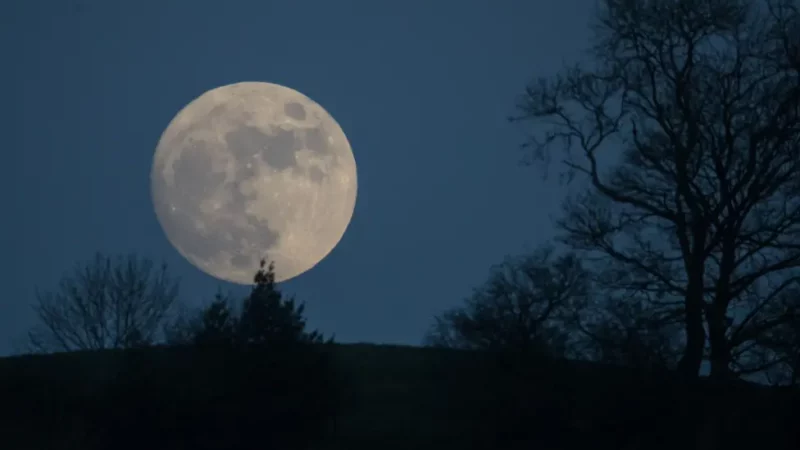
Journey Tribune – The first full Moon of 2026 is set to light up skies across the UK this weekend, offering a striking celestial display at the start of the new year. Rising on Saturday, 3 January, the January full Moon—known as the Wolf Moon—will also appear as a supermoon, making it larger and brighter than an average full Moon.
The timing is expected to bring a welcome visual lift following the post-Christmas lull, just as festive decorations and fairy lights are packed away. With weather conditions looking favourable in many areas, skywatchers are being encouraged to look up and enjoy one of the most impressive lunar sights of the year.
This Wolf Moon is particularly notable because it is the fourth supermoon in a row. It follows October’s Harvest Moon, November’s Beaver Moon and December’s Cold Moon, creating an unusually long sequence of consecutive supermoons. While supermoons themselves are not rare, having four back-to-back is extremely rare.
Those who miss this weekend’s display will need to wait until November for another supermoon. However, 2026 still has plenty to offer lunar enthusiasts, as the year will feature 13 full Moons instead of the usual 12, including a rare blue Moon in May.
Why Is It Called a Supermoon?
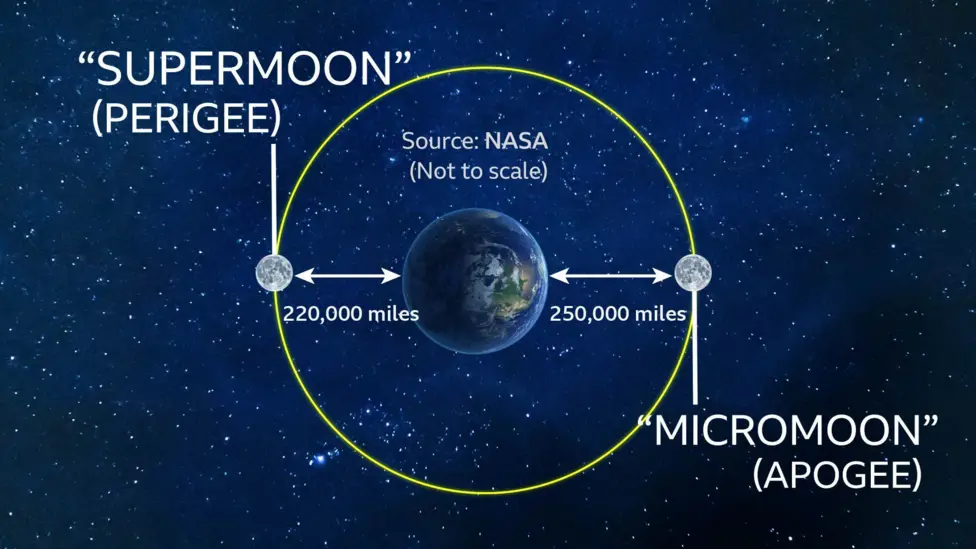
The term “supermoon” describes a full Moon that occurs when the Moon is at its closest point to Earth in its orbit, a position known as perigee.
The Moon does not orbit Earth in a perfect circle. Instead, its path is slightly elliptical, meaning the distance between the Earth and the Moon changes throughout the month. At perigee, the Moon sits around 220,000 miles from Earth. At its most distant point, known as apogee, it can be roughly 250,000 miles away.
When a full Moon coincides with perigee, it appears noticeably larger and brighter in the sky. Astronomers estimate that a supermoon can look up to 14% bigger and around 30% brighter than a full Moon at apogee.
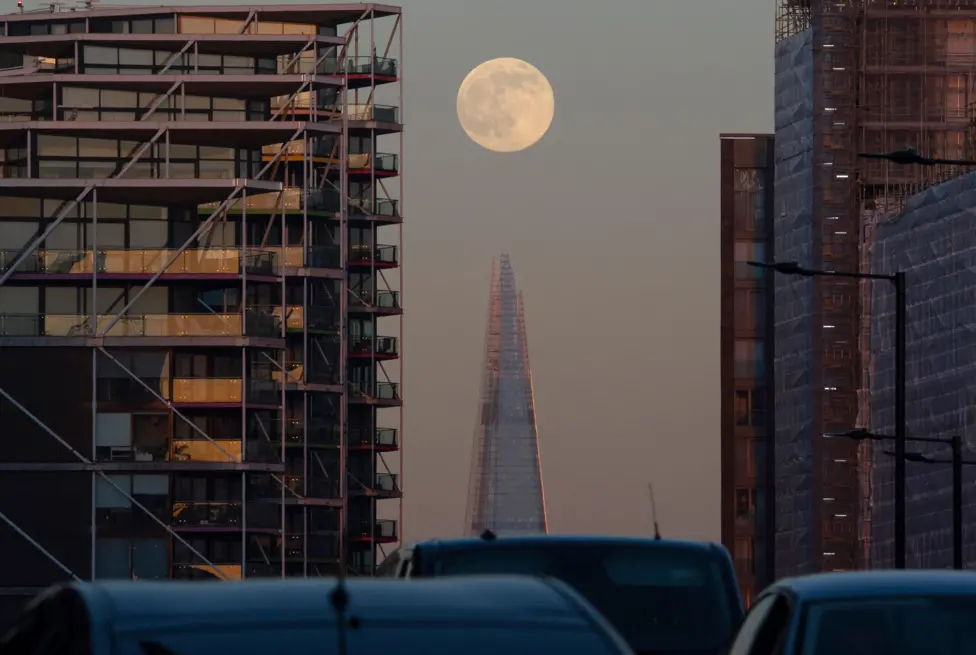
Although the difference may not always be obvious at first glance, the effect becomes particularly striking when the Moon is low on the horizon. Buildings, trees and hills provide a visual reference that enhances the illusion of size, making the Moon appear especially dramatic at moonrise.
On average, Earth experiences three or four supermoons each year, which means they are not especially rare. However, the run of four consecutive supermoons spanning late 2025 and early 2026 makes this Wolf Moon stand out.
Why the ‘Wolf Moon’?
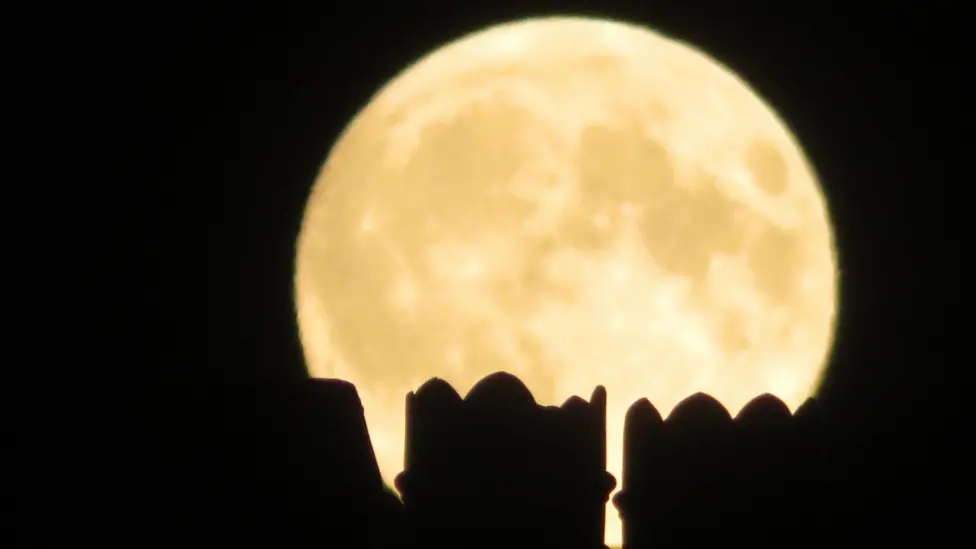
The name “Wolf Moon” originates from ancient traditions that date back to a time long before modern calendars were in use. Historically, full Moons were used to track time and seasonal changes, with each Moon given a name that reflected events in nature or daily life.
The Wolf Moon is believed to refer to the howling of wolves during midwinter, when cold conditions and scarce food made the animals more active and more audible near human settlements. While the exact origins are debated, the name has endured as part of a broader tradition of naming full Moons.
Other well-known examples include the Harvest Moon, Flower Moon and Hunter’s Moon, each linked to agricultural cycles or seasonal activities. These names served as practical markers of time for early communities, long before printed calendars became common.
When Can We See It?
The Wolf supermoon will rise on Saturday, 3 January, and will officially reach full phase at 10:03 GMT. However, the most impressive views are expected later in the day around moonrise, when the Moon appears largest near the horizon.
Moonrise times vary across the UK. In Aberdeen, the Moon is expected to rise at 15:06, while Belfast will see it at 15:48. In Oxford, moonrise is forecast for 15:51, and in Swansea at 16:03.
Clear western and southern horizons will offer the best viewing conditions. No special equipment is needed, although binoculars or a camera can enhance the experience.
Looking further ahead, there will be two more supermoons in 2026, occurring in November and December. The year will also feature a blue Moon in May, when two full Moons appear in the same calendar month. This rare occurrence is the origin of the expression “once in a blue Moon”.
What About the Weather?
Forecasts suggest that much of the UK will enjoy clear or partly clear skies on Saturday evening and overnight, providing good opportunities to view the Wolf Moon.
However, conditions may be less favourable in Northern Scotland, eastern England and parts of west Wales, where increased cloud cover and a continued risk of snow showers are expected.
Temperatures are set to fall quickly after sunset, with a strong northerly wind making it feel particularly cold. Anyone planning to watch the Moon rise is advised to dress warmly and take care in icy conditions.
Other Night-Sky Highlights
Skywatchers may also want to keep an eye out for the Quadrantids meteor shower, which is expected to peak on the nights of 3 and 4 January. Although the peak is brief, the shower can produce a high number of meteors per hour under clear, dark skies.
Together, the Wolf supermoon and the Quadrantids make the first weekend of 2026 a standout moment for stargazers, offering a reminder of the natural spectacles that continue to mark the passage of time above our heads.
