
New Divinity Trailer Drops – And It’s Absolutely Mind-Blowing

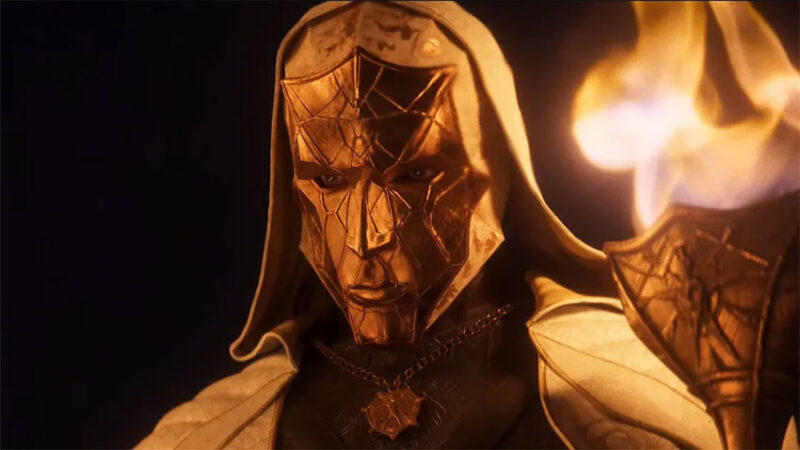
Journey Tribune – What began as a wave of confusion and speculation over an odd, vine-covered statue circulating across social media has culminated in one of the most dramatic reveals at The Game Awards 2025. Larian Studios, fresh off the unprecedented global success of Baldur’s Gate 3, has officially announced its next major project: a new entry in its long-running fantasy universe, titled simply Divinity.
The reveal came with a chilling and hyper-cinematic trailer—equal parts folk horror, medieval pageantry, and apocalyptic dread—that instantly set the tone for what the studio promises will be its most ambitious RPG yet. After weeks of leaks, mysterious teasers, and a trademark filing that quietly hinted at Larian’s direction, the studio finally confirmed what many longtime fans had hoped: the return of Divinity, but on a scale the series has never seen before.
A Trailer That Leans Into Horror—and History
The announcement trailer opened not with sweeping landscapes or heroic monologues, but with a seemingly festive medieval carnival, its revelers dancing around a towering wicker effigy. That idyllic atmosphere soured quickly. As the bonfire beneath the wicker man ignited, viewers saw a man shackled inside, screaming as flames consumed both him and the structure.
As his flesh melted away—an intentionally grotesque visual—his blood seeped into the earth, triggering the growth of shrieking, corkscrewing plants that erupted from the soil. Moments later, the wicker man itself convulsed, its wooden limbs jerking violently as though the sacrificial ritual had awakened something ancient and furious.
The trailer concluded with the now-familiar statue that Larian had scattered across cryptic teaser sites in prior weeks: a towering figure warped by vines, roots, and runic markings. A single word appeared across the screen:
DIVINITY
It was simple. Striking. And enough to send fans into a frenzy.
Larian Teases Its Most Ambitious RPG Yet
Following the world premiere, Larian issued an official statement hinting at the scope and tone of the project. “The gods are silent. Rivellon bleeds. New powers stir,” the press release declared—language that suggests a world in crisis and a story centered on the vacuum left by absent divinities.
The studio emphasized that Divinity is entirely new, not a sequel or reboot, and does not require prior knowledge of earlier titles. However, it noted that fans of Divinity: Original Sin and its sequel may catch deeper lore ties and thematic echoes.
Swen Vincke, founder and creative director of Larian Studios, reinforced this message. “Despite our long history with this universe, this is the first time we’ve created a game simply called Divinity,” he said. “We’re bringing together everything we’ve learned—from Original Sin to Baldur’s Gate 3—into one unified vision. This marks the beginning of a world with greater breadth, depth, and emotional intimacy than anything we’ve attempted before.”
Vincke described the project as a culmination of Larian’s decades-long creative evolution. “We’ve been building toward this moment ever since we took control of our own fate. This is the Divinity we’ve always wanted to make.”
A Return to a Beloved Universe
The Divinity franchise dates back to 2002’s Divine Divinity, followed by Beyond Divinity (2004), Divinity II (2009), and the genre-blending strategy title Divinity: Dragon Commander (2013). Larian reinvented the universe with Divinity: Original Sin (2014) and its critically acclaimed 2017 sequel.
While the Original Sin games were turn-based CRPGs, much of the earlier Divinity catalog leaned more toward action RPG design. Larian has not yet clarified which direction the new title will take, though its recent track record—with both Original Sin 2 and Baldur’s Gate 3 delivering genre-defining turn-based combat—has set clear expectations among fans.
Critically, Larian’s modern reputation is unmatched: Original Sin 2 earned near-universal praise for reimagining classic CRPG design, while Baldur’s Gate 3 became a cultural and industry phenomenon, reshaping expectations for narrative-driven RPGs.
Given that momentum, Larian’s decision to return to its own IP rather than pursue Baldur’s Gate 4 is unsurprising. The studio has previously confirmed that the Baldur’s Gate franchise remains under Hasbro’s authority.
What Comes Next
For now, Larian is keeping details—gameplay, platforms, release window—firmly under wraps. But if the tone of the announcement is any indication, Divinity aims to be a defining RPG for the decade ahead.
The studio that reshaped modern CRPGs is returning to the universe that started it all. And if its track record is anything to go by, Rivellon is about to bleed in spectacular fashion.
