
Netflix Rescues Hollywood: Why WBD Chose the Winning Team

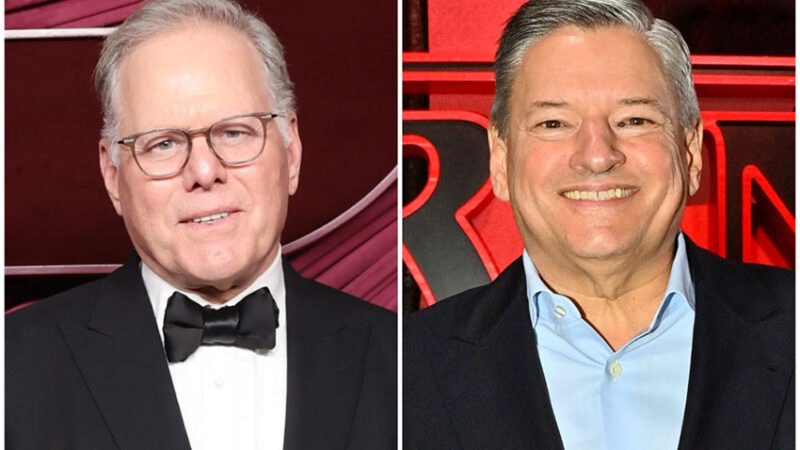
Journey Tribune – The long-rising tension inside Hollywood reached a new peak on Thursday night when Netflix and Warner Bros. Discovery (WBD) finalized an $82.7 billion deal that will place Warner Bros. and HBO Max under the Netflix umbrella. The agreement was sealed just after 10 p.m. ET following several days of constant phone calls, video meetings, email threads, and rapid-fire text exchanges among executives scattered across New York, Los Angeles, Washington, D.C., and beyond.
There were no celebratory handshakes or boardroom photo ops. As is increasingly common with modern mega-deals, nearly all negotiations took place remotely, with lawyers, advisors, and senior leadership managing the process from different parts of the country.
Yet behind the digital logistics was a fierce, high-stakes contest. Even before the ink was dry, labor unions, consumer groups, and political figures from both major U.S. parties lined up to oppose the merger. The Writers Guild of America was blunt in its reaction: “This merger must be blocked,” the guild declared on Friday.
But for the WBD board, the choice became clear. Among the bidders—Netflix, Paramount Skydance, and Comcast—the board saw Netflix as the most financially stable and strategically prepared partner for the company’s long-term survival.
Why Netflix Became the Favorite
One of the final sticking points for WBD was its demand for a record-setting $5.8 billion breakup fee if regulators stopped the deal. Netflix accepted the term—something neither of the other bidders was prepared to do.
Beyond individual provisions, Netflix’s biggest advantage was its track record. Over the past decade, while traditional studios struggled with shrinking cable revenues, volatile box office performance, and mounting debt, Netflix maintained one of Wall Street’s most reliable growth stories. The streamer’s subscription model, international scale, and deep cash reserves reassured the WBD board that Netflix could weather economic shocks better than its rivals.
The contrast with Paramount Skydance was striking. Although Paramount Pictures and CBS are century-old media institutions, their merger under Skydance created a company still grappling with high debt and the daunting task of turning around shrinking cable networks while reigniting box office momentum. Several WBD board members questioned how Paramount would hold up if the economy hit another major downturn.
The board was equally wary of Comcast’s bid, seeing potential regulatory complications tied to Comcast’s cable operations and broadcast assets.
Politics and Perception
Complicating the Paramount bid further were whispers in Hollywood and Washington that only David Ellison—backed by his family’s connections to the Trump White House—could secure approval for such a large media merger. Those rumors irritated several WBD board members and became an additional strike against Paramount.
Netflix, meanwhile, arrived with a different political narrative. Former President Donald Trump, despite his frequent criticism of Hollywood, has long admired successful business stories—and Netflix’s meteoric rise fits that bill. Trump has maintained contact with Netflix co-CEO Ted Sarandos, offering the streamer at least a somewhat predictable political footing compared to competitors.
Still, both Netflix and WBD know the regulatory fight ahead will be grueling. Executives anticipate up to 18 months of scrutiny as the Federal Trade Commission and the Justice Department weigh the merger’s impact. Although the Federal Communications Commission is expected to play a minimal role—WBD lacks broadcast stations or cable systems—the political posturing around “big media consolidation” will be intense on both the left and right.
Strategic Outlook: What Happens Next
Netflix leaders, including Sarandos and co-CEO Greg Peters, have stressed that HBO Max and Warner Bros. will continue to operate as distinct brands. Industry veterans, however, know that eventually every merger leads to consolidations, redundancies, and restructurings—especially at the executive level.
For WBD CEO David Zaslav, the future is now clearer. He has reportedly told colleagues he intends to help guide the merger to completion and hand over a strong Warner Bros. and HBO Max portfolio to Netflix leadership. While he will lose the CEO role once the deal closes, he stands to gain millions through stock compensation—alongside other senior executives at Warner Bros. and HBO.
In an era where Hollywood’s traditional pillars are shaking under technological and economic pressure, the WBD–Netflix union marks a turning point. Whether it becomes another AOL-Time Warner disaster or a defining moment in entertainment history will depend on how the next 18 months unfold.
