
Machado’s Shocking Oslo Reveal

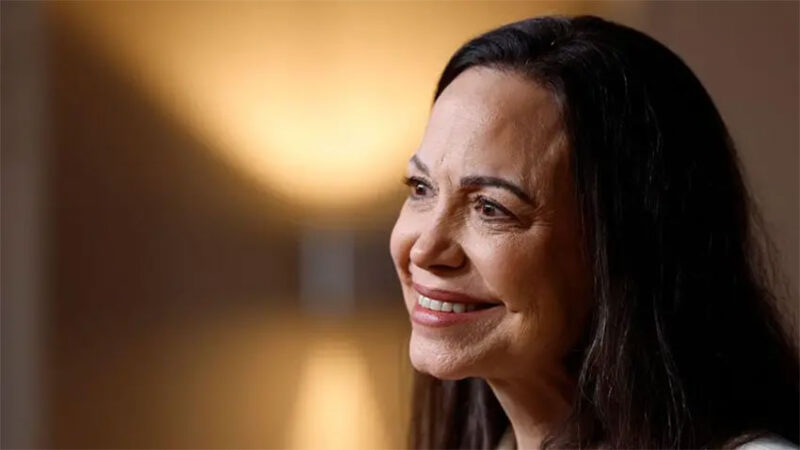
Journey Tribune – María Corina Machado arrived in Oslo under circumstances that many in Venezuela and abroad have described as nothing short of perilous. The Venezuelan opposition figure—long considered one of the most prominent challengers to the government of Nicolás Maduro—landed in the Norwegian capital on Wednesday to belatedly receive the Nobel Peace Prize awarded to her this year. She came without belongings, without prior notice, and, according to multiple accounts, after a clandestine escape from Venezuela.
Machado, who spent more than a year in hiding after organizing nationwide protests following the disputed 2024 presidential election, was unable to attend the Nobel ceremony. Her daughter, Ana Corina Sosa, accepted the medal and diploma on her behalf. But Machado’s appearance just hours later electrified the Venezuelan diaspora gathered outside her hotel, many of whom had waited under freezing temperatures for the chance to greet her.
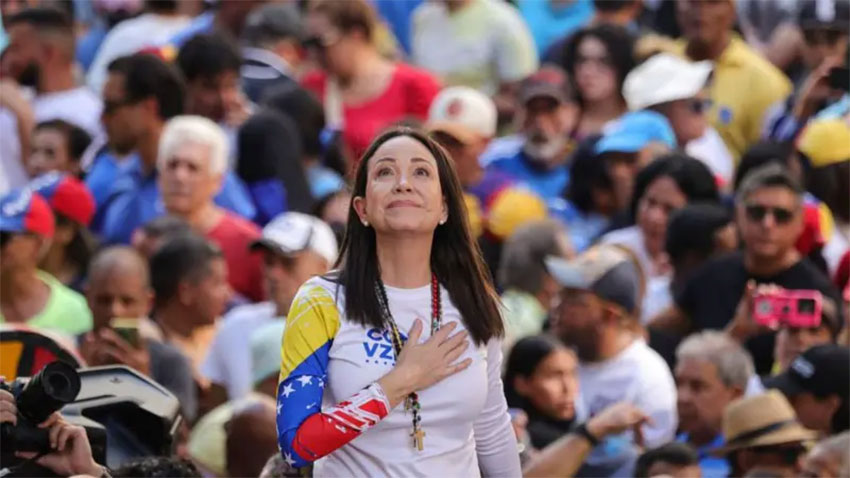
It was also her first physical reunion with her family in over sixteen months—a moment she described as “deeply overwhelming.” During an interview with BBC presenter Lucy Hockings, Machado said she had not been able to hug anyone for more than a year, adding that the gesture of holding her children again was “enough to remind me that everything I’ve done has been for them and for Venezuela’s children.”
A Fugitive in Exile
Her arrival in Oslo marks a new stage in her political struggle. Venezuelan authorities have labeled her a fugitive, accusing her of terrorism, conspiracy, and incitement of hatred—charges she and her supporters call politically motivated. Machado was barred from running in the 2024 presidential election, but endorsed opposition candidate Edmundo González, whom the opposition claims won the vote based on thousands of tallied precinct reports. Maduro maintains he won legitimately and has accused the opposition of seeking foreign military intervention.
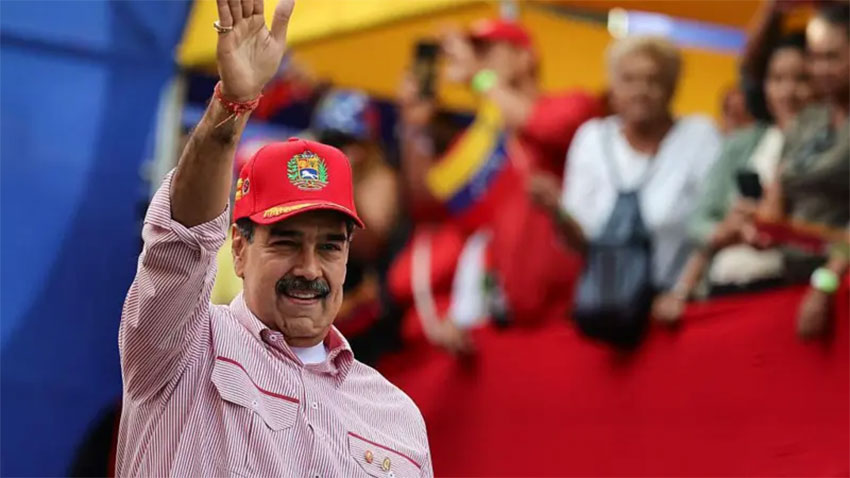
Amid this standoff, U.S. forces have expanded their presence in the Caribbean, following Washington’s designation of Maduro as a “terrorist actor.” The geopolitical tension, combined with Venezuela’s internal turmoil, has led many analysts to describe the situation as the most volatile moment in the country’s modern history.
The Escape She Won’t Detail
Reports circulating in Oslo claimed Machado traveled through military checkpoints in disguise, boarded a fishing vessel to Curaçao, and eventually took a private aircraft onward to the United States before arriving in Norway. Machado refused to confirm specifics.
“What matters,” she stressed, “is that Venezuela has become a state run through terror. Anyone who dares to speak, to demand their basic rights, risks imprisonment. If the authorities do not find you, they arrest your relatives—even children.”
She emphasized that her escape was only possible because “many men and women risked their lives so that I could reach Oslo.”
A Promise to Return
Despite the dangers she acknowledges, Machado insists she will go back.
“I will return to Venezuela,” she said firmly. “The government would have disappeared me if they had found me. I understand the risk, but I will be wherever I can best serve our cause. Today, that place is Oslo. Soon, it will be home again.”
Pressed about whether she had been given security guarantees by U.S. officials—including former President Donald Trump or Senator Marco Rubio—Machado declined to comment. She did, however, praise Washington’s stance on Venezuela, saying the international community has finally recognized the “criminal structure” she claims operates at the core of the Maduro government.
On Intervention and Transition
Machado reiterated that she does not seek war, but said Venezuela needs the world’s help to dismantle what she calls “illicit financial lifelines” sustaining the regime—ranging from narcotrafficking to illegal mining and human trafficking.
She argued that an international coalition, not solely led by the United States, must target these networks. When asked whether military action would contradict the symbolism of a Nobel Peace Prize recipient, Jorgen Watne Frydnes, chair of the Norwegian Nobel Committee, intervened. He stressed the prize recognizes Machado’s efforts toward democracy and a peaceful transition—and that responsibility for preventing violence lies with the Maduro government.
What Comes Next for Maduro?
Regarding Maduro’s future, Machado said he has repeatedly been offered peaceful exit options, especially after the opposition claims to have won the 2024 election.
“He rejected every opportunity,” she said. “Now the pressure is internal, from the Venezuelan people, from the security forces, and from the international community.”
She declined to outline specific negotiation scenarios, saying only that Maduro is running out of time: “This is the moment for him to leave.”
A Vision of a “Free Venezuela”
Looking ahead, Machado vowed that a democratic Venezuela would implement sweeping reforms, including what she called a “security shield” to expel what she described as “agents of authoritarian regimes”—specifically naming Russia, Iran, and Hezbollah.
“The day Maduro leaves,” she said, “millions of Venezuelans will return home. We will turn Venezuela from the criminal hub of the Americas into its energy center.”
Despite uncertainty, Machado expressed full confidence: “They told us it was impossible to unite the country, impossible to defeat Maduro, impossible for me to be sitting here today. But we are doing the impossible. Our fight for freedom is a fight for peace—and it is a fight rooted in love.”
