
Is It Safe to Travel to Japan? Aftershock Risk Remains

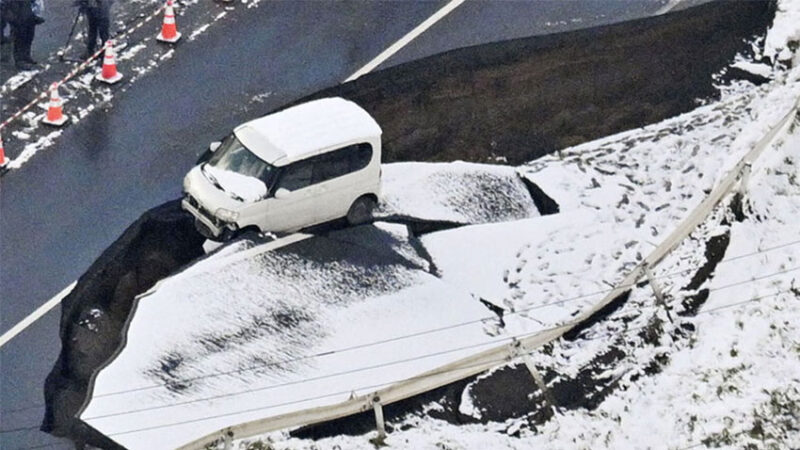
Journey Tribune – Japan remained on heightened alert on Tuesday after a powerful offshore earthquake rattled the country’s northern regions, prompting tsunami warnings, transport shutdowns, and widespread anxiety about the possibility of an even larger seismic event. Although the immediate danger has passed and tsunami alerts were lifted, the Japan Meteorological Agency (JMA) has cautioned that the risk of strong aftershocks — including a potential “megaquake” — will persist for at least a week.
The 7.5-magnitude earthquake struck late Monday night, sending tremors through the northern prefecture of Aomori and triggering emergency responses across several municipalities. At least 33 people were reported injured, though authorities suggested the toll could rise as assessments continue in more remote communities.
A Northern Region Shaken Awake
According to the JMA, the quake was centred in the Pacific Ocean roughly 50 miles east of Aomori, striking at about 11:15 pm local time on 8 December. Aomori, known for its rugged coastline and harsh winters, sits at the northernmost tip of Honshu, Japan’s main island. While the region is accustomed to frequent seismic activity, the strength and duration of Monday’s tremor prompted immediate concern about potential tsunami impacts.
Initial warnings urged people along the northeast coast to evacuate to higher ground, but the waves that followed reached only around 2.2 feet — far below the damaging heights that authorities feared. By early Tuesday morning, all tsunami alerts had been cleared.
Still, the quake left a temporary trail of disruption. East Japan Railway suspended several local lines, and two Shinkansen trains travelling along the expressway routes were forced into emergency stops. Meanwhile, traffic congestion surged as residents in Hachinohe reportedly attempted to flee coastal zones in the dark, leading to car accidents and gridlock.
At New Chitose Airport in Hokkaido — one of Japan’s busiest aviation hubs — around 200 passengers were left stranded overnight after flights were grounded for safety checks. While some delays and cancellations continued into Tuesday, airport operations were largely stabilising by midday, according to flight-tracking data.
The “Megaquake” Warning Explained
While Japan lifted immediate tsunami concerns, the JMA simultaneously issued what is known as a “subsequent earthquake advisory” — often referred to informally as a “megaquake” alert. The advisory is triggered when an earthquake of magnitude 7.0 or greater occurs either onshore in Japan or in regions such as the Kuril–Kamchatka Trench, increasing the statistical likelihood of a major secondary quake.
The agency stressed that the probability of such a catastrophic event remains extremely low — roughly one per cent — but noted that caution is essential in the days following such a powerful tremor. The advisory covers a broad coastal area stretching from Hokkaido down to Chiba Prefecture, just east of Tokyo.
Officials urged residents to check evacuation routes, secure heavy furniture, and ensure that they have emergency supplies at home, including water, food, and portable sanitation. Authorities also warned of heightened risks of landslides and structural collapses in locations that experienced the strongest shaking.
The system of issuing megaquake advisories was created in the aftermath of Japan’s devastating 2011 Tōhoku earthquake and tsunami, which killed nearly 20,000 people and triggered the Fukushima nuclear disaster. While a repeat of that catastrophe is not currently forecast, Japan’s disaster agencies emphasise preparedness as a fundamental precaution.
Travel Advice for Foreign Visitors
The UK’s Foreign, Commonwealth & Development Office (FCDO) issued a brief update following the earthquake, confirming that tsunami alerts had been lifted but echoing Japanese warnings of potential strong aftershocks. The FCDO has not advised against travel to Japan, meaning trips and holidays remain unaffected under standard travel-insurance rules.
Travellers are encouraged to follow local guidance, monitor reputable news sources such as NHK — Japan’s public broadcaster — and remain aware of their surroundings if visiting northern prefectures. Most transport networks, including domestic flights and rail services, were expected to return to normal operations quickly unless further seismic activity occurs.
Impact on Holiday Plans
Because the UK government has not recommended avoiding travel to Japan, travellers cannot automatically cancel holidays for a refund. Tour operators and airlines are handling changes on a case-by-case basis. Those wishing to postpone their trips must check the terms of their bookings, as companies are under no obligation to issue refunds based solely on safety concerns.
Some travel insurance policies include coverage for natural disasters that make a destination inaccessible. However, the general fear of aftershocks is not considered a valid claim unless official advisories change.
For now, Japan remains open to visitors, though officials and experts alike warn that vigilance is essential in the days following a major quake. As aftershocks continue to ripple through the region, residents and travellers are urged to stay informed — and prepared — until seismic conditions stabilise.
