
A Night of Art and Unity Opens the 2026 Winter Olympics in Italy

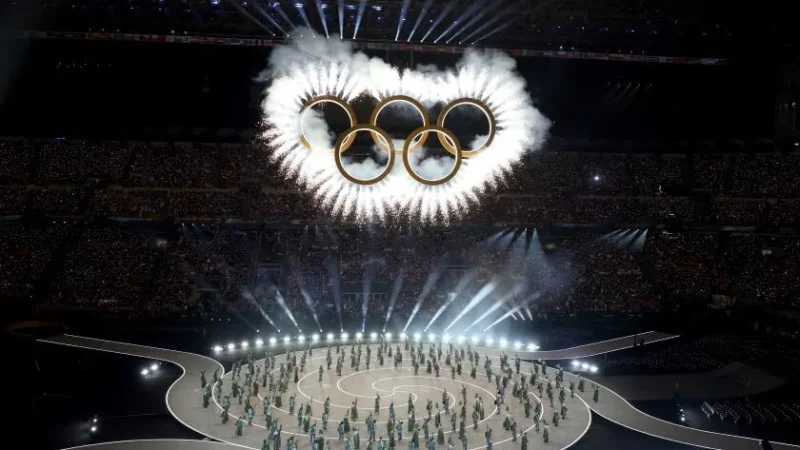
Journey Tribune – The Winter Olympics returned grandly on Friday night, wrapped in Italian elegance and theatrical confidence, as Milan officially opened the 2026 Games with a ceremony that blended artistic ambition, national pride, and a clear message of unity in a divided world. Staged primarily at the iconic San Siro Stadium and mirrored by parallel moments in Cortina d’Ampezzo, the opening ceremony was both expansive and intimate, unapologetically stylish and emotionally resonant.
Few events rival the Olympic opening ceremony in scale or symbolism. It is not merely a prelude to sport, but a cultural statement — a moment when a host nation introduces itself to the world through art, music, and spectacle. Italy seized that opportunity with characteristic flair, delivering a production that was sleek, dramatic, occasionally extravagant, and unmistakably Italian.
Directed by Marco Balich, a veteran of large-scale international ceremonies, the evening unfolded with a carefully curated visual language. The program began in pristine white, inspired by classical Italian sculpture, notably Antonio Canova’s “Psyche Revived by Cupid’s Kiss,” interpreted through contemporary ballet. The tone then shifted to stark black and white, a cinematic homage to Federico Fellini’s La Dolce Vita and the paparazzi culture that once defined Rome’s postwar glamour.
From there, the ceremony erupted into color. Giant floating structures released cascades of vibrant fabric, transforming the stadium floor into a living canvas. Performers embodied a playful parade of Italian cultural symbols: operatic “bobblehead” figures representing composers Giuseppe Verdi, Giacomo Puccini, and Gioachino Rossini; stylized gladiators; oversized moka coffee pots; and a procession of runway models dressed in green, white, and red, evoking the Italian flag in high-fashion form.
Music played a central role throughout the night, bridging Italy’s artistic past with its global present. One of the most striking moments belonged to Mariah Carey, who appeared statuesque in silver and white, adorned with lavish jewelry. Though not Italian, Carey delivered a surprisingly moving rendition of the beloved Italian standard “Nel blu, dipinto di blu,” widely known as “Volare,” seamlessly transitioning into her own anthem, “Nothing Is Impossible.” In the context of the ceremony, the performance felt less like a pop cameo and more like a universal tribute, earning an emotional response even from skeptics.
As tradition dictates, the Parade of Nations followed, transforming the stadium into a winter fashion showcase. Cold-weather Olympic uniforms once again proved more visually compelling than their summer counterparts. The United States team marched in white outerwear designed by Ralph Lauren, while delegations entered in alphabetical order, with customary exceptions for Greece, Italy, France, and future host nations. Smaller countries drew warm applause, and the Ukrainian team received a particularly strong ovation, reflecting ongoing global solidarity.
The second half of the ceremony leaned more explicitly into storytelling and symbolism. Actress Sabrina Impacciatore appeared first in animated form, traveling backward through Olympic history before emerging live on stage to lead a high-energy dance sequence that returned the narrative to the present. Her performance was among the evening’s most dynamic and physically demanding.
Classical music followed, underscoring Italy’s enduring influence on global culture. Pianist Lang Lang accompanied mezzo-soprano Cecilia Bartoli for the Olympic anthem, while Andrea Bocelli delivered a powerful interpretation of Puccini’s “Nessun Dorma,” surrounded by dancers and a full string ensemble. In a striking contrast of genres, Italian rapper Ghali later recited an anti-war poem by children’s author Gianni Rodari, reinforcing the ceremony’s broader humanitarian themes.
The guiding concept of the evening was “Armonia” — harmony — a word echoed throughout speeches and performances. Organizing committee president Giovanni Malagò addressed athletes directly, emphasizing unity over division. IOC President Kirsty Coventry, the first woman to hold the position, highlighted the paradox at the heart of the Games: fierce competition grounded in mutual respect.
Actor Charlize Theron added a pointed political note by quoting Nelson Mandela on peace and inclusion, framing the Olympics as a platform not only for sport but for moral leadership at a time of global conflict. The message was unmistakable, even as it remained diplomatically phrased.
The ceremony concluded with the lighting of two Olympic cauldrons, one in Milan and one in Cortina, symbolizing the shared geography of the Games. Flames ignited within sculptural, shape-shifting spheres, bringing the spectacle to a close with quiet grandeur.
At times, the ceremony leaned into sentimentality. Yet even its most overtly emotional moments felt earned. As the final notes faded and fireworks lit the sky, the message was clear: Italy had not merely opened the Winter Games — it had set an ambitious, heartfelt tone for the weeks ahead.
The Olympics have begun.
