
Cartel Kingpin Falls – A Turning Point for Safer Cities?

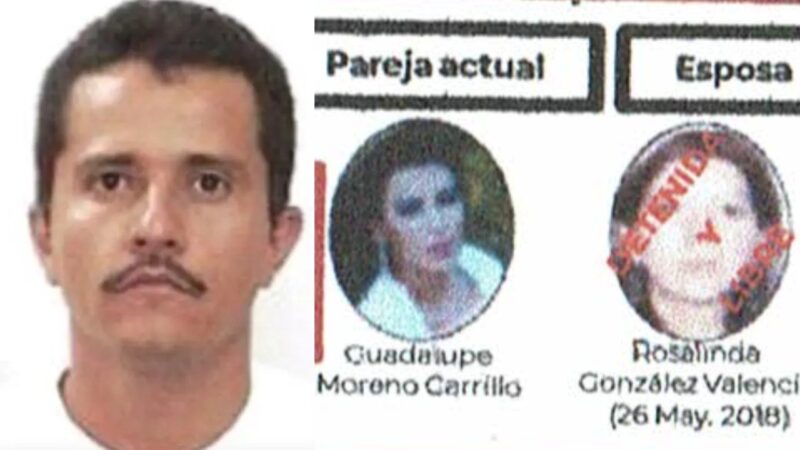
Journey Tribune – The killing of Nemesio Oseguera Cervantes — widely known as “El Mencho” — marks one of the most consequential security operations in modern Mexican history. The February 22 raid in Tapalpa delivered what analysts are calling the most significant blow to organized crime in more than a decade, targeting the leader of the Cártel Jalisco Nueva Generación, or CJNG, a criminal network widely considered among the most powerful transnational syndicates operating today.
In operational terms, some security specialists argue the strike may prove more consequential than the arrest of Joaquín “El Chapo” Guzmán. Unlike Guzmán, whose organization relied heavily on his personal authority, Oseguera spent years constructing a decentralized structure designed to survive his loss. That distinction now defines the paradox facing Mexico: the state has eliminated a top target, yet the threat landscape may be about to grow more volatile.
Within minutes of confirmation of his death, coordinated road blockades erupted across at least eight states. These so-called narcobloqueos were not spontaneous acts of chaos but synchronized displays of operational capacity. Analysts say the rapid response indicates the cartel had contingency protocols in place for precisely such a scenario. Far from collapsing, regional cells appear to remain armed, funded, and tactically autonomous.
Security officials involved in the operation described seized weapons caches as unusually large, though specialists caution that such arsenals may actually represent standard stockpiles for a group that, in just 15 years, built a global trafficking infrastructure spanning multiple continents. The scale and speed of retaliation underscore that the organization’s command-and-control capabilities were not dismantled along with its leader.
Although authorities have not formally detailed foreign involvement, seasoned observers consider cooperation with the United States Department of State and other U.S. agencies highly plausible, reflecting a pattern of bilateral intelligence sharing in high-value targeting missions. History shows that when a state mobilizes its full institutional power against a criminal organization, few such groups can withstand sustained pressure.
Yet precedent also suggests the most dangerous phase begins after a kingpin falls.
Colombia experienced it following the death of Pablo Escobar. Mexico witnessed a similar dynamic after the capture of Ovidio Guzmán López. Leadership vacuums rarely produce peace; instead, they ignite succession struggles. In criminal ecosystems, those conflicts unfold not in boardrooms but in neighborhoods, transport corridors, and municipal institutions. Rival factions compete for smuggling routes, revenue streams, and territorial legitimacy, often through public displays of violence meant to project dominance.
The risk now confronting authorities is fragmentation. Should the CJNG splinter into competing regional factions while rival organizations attempt to seize strategic corridors, the resulting patchwork of conflicts could prove more unpredictable than the centralized threat posed under Oseguera’s command. Analysts warn that decentralized violence is harder to contain because it multiplies decision-makers, each capable of ordering attacks independently.
Timing intensifies the stakes. The FIFA World Cup 2026 is just over 100 days away, and Mexico is scheduled to host matches in three cities, including Guadalajara, the metropolitan area closest to the current epicenter of cartel tensions. Games there will take place at Estadio Akron, placing international attention squarely on regional security conditions.
Within hours of the operation, Washington issued travel security alerts for citizens in Jalisco state, and officials in Canada released similar advisories. Such warnings highlight how closely foreign governments, global broadcasters, sponsors, and tournament organizers are monitoring developments. Diplomatic and economic observers note that the next month may be critical for demonstrating that state institutions retain territorial control.
Federal authorities now face a narrow strategic window. Experts argue that success will depend not only on force but on intelligence-driven follow-through: dismantling financial networks, disrupting communications, and neutralizing regional operators before any single figure consolidates power. That window, however, is likely to close quickly as criminal actors adapt.
The elimination of El Mencho is unquestionably a tactical victory. But history suggests that celebrating too soon — without anticipating the systemic consequences — risks turning triumph into strategic miscalculation. In conflicts against organized crime, removing a leader is often the opening move, not the endgame. And with global scrutiny intensifying ahead of a major international event, the margin for error has rarely been smaller.
